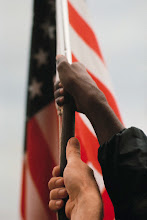
Maya Angelou discusses the affect of the Civil Rights Movement around the world.
Showing posts with label Samira. Show all posts
Wednesday, April 30, 2008
Monday, April 28, 2008
"Still I Rise" by Maya Angelou
With your bitter, twisted lies,
You may trod me in the very dirt
But still, like dust, I'll rise.
Does my sassiness upset you?
Why are you beset with gloom?
'Cause I walk like I've got oil wells
Pumping in my living room.
Just like moons and like suns,
With the certainty of tides,
Just like hopes springing high,
Still I'll rise.
Did you want to see me broken?
Bowed head and lowered eyes?
Shoulders falling down like teardrops,
Weakened by my soulful cries.
Does my haughtiness offend you?
Don't you take it awful hard
'Cause I laugh like I got gold mines
Diggin' in my own back yard.
You may shoot me with your words,
You may cut me with your eyes,
You may kill me with your hatefulness,
But still, like air, I'll rise.
Does my sexiness upset you?
Does it come as a surprise
That I dance like I've got diamonds
At the meeting of my thighs?
Out of the huts of history's shame
I rise
Up from a past that's rooted in pain
I rise
I'm a black ocean, leaping and wide,
Welling and swelling I bear in the tide.
Leaving behind nights of terror and fear
I rise
Into a daybreak that's wondrously clear
I rise
Bringing the gifts my ancestors gave,
I am the dream and the hope of the slave.
I rise
I rise
I rise.
Maya Angelou In Her Own Words
Maya Angelou discusses her childhood.
Maya Angelou: Poet, Activist, and Phenomenal Woman

Maya Angelou was born as Marguerite Annie Johnson in St. Louis, Missouri in 1928. After the divorce of her parents when she was three years old, she moved to live with her grandmother in Stamps, Arkansas. Angelou’s life changed at age seven when she went to visit her mother in Chicago. Angelou was raped by her mother’s boyfriend, and the man was beaten to death by one of Angelou’s family members. The trauma of the event prompted her to become mute. She did not begin speaking again until age thirteen because she felt that her words had killed her attacker. Angelou credits her teacher, Bertha Flowers, for helping her to speak again and for introducing her to classic literature. The double bonds of being black and being a woman was something that Angelou certainly faced throughout her life. Growing up, she was a victim of the bitter racism of the south. She also understood from an early age how brutal the world could be for women after her assault. Angelou's life experiences have been a major influence on her work.
Angelou’s work reflects her involvement and commitment to civil rights. A recurring theme in Angelou’s work is racial pride, despite the demeaning way in which society has sometimes portrayed blacks. Her works are often centered on the evolution of the black community, as well as the challenges of being a woman. In Angelou’s personal life, she was extensively involved in activism. To combat the injustice that she saw, she became very active in the Civil Rights Movement during the 1960s. Angelou met and became close to some of the most influential civil rights activists of all time. While living in Ghana, Angelou became friends with civil rights leader, Malcolm X. She planned to return to the United States to help him to launch a new organization called the Organization of African American Unity, but their plans were thwarted when he was assassinated in 1965. Angelou was also very close to civil rights icon Dr. Martin Luther King Jr. because of her role as northern coordinator of the Southern Christian Leadership Conference (SCLC).
Although Angelou was devoted to civil rights, the movement was largely based on the ideals of black men. Sexism was prevalent in the Movement. It was sometines thought that the women of the movement should only be doing “women’s jobs” instead of being in the forefront. Women were often not taken seriously, and many of the jobs available to them were things like working as secretaries for the men who lead the movement. Moreover, feminism was largely a movement for white women, so black women were excluded from the Women’s Movement as well. Black women were put in an awkward situation. In a time in which people were seemingly so enthralled in achieving equality, the black woman had no one fighting for her.
In Angelou’s autobiography, I Know Why the Caged Bird Sings, she tells stories of racism that she and her family endured while living in Arkansas. She was blatantly harassed, treated with contempt, forced to sit in “colored only” sections in public, and sometimes refused services because of her race. During an interview with the Academy of Achievement, Angelou was asked how she dealt with the racism that she has faced throughout her life. She replied, “The truth is, you cannot get rid of it. It is there. What you can do is put positive things in there along with the negative. But it’s a given that you will remember that the rest of your life.”
Angelou’s poem, “Still I Rise,” is one of her most beautiful and eloquent condemnations of racism and prejudice. The pride, sassiness, and inspirational message of the poem has made it a favorite of many. Angelou has said that she reflects on this poem when facing challenges or difficulties. She has also written a poem specifically for women. “Phenomenal Woman,” Angelou explains, was written for all women. The poem is meant to be inspirational for women of all races, backgrounds, and body types. The poem evokes the same sense of pride found in “Still I Rise.” Angelou puts power in the hands of women, challenging the notion that women should be defined by men and that women should be judged on the basis of their looks.
Angelou's pride in being a black and being a woman is evident in her writing. Her personal life and involvement in the Civil Rights Movement has made her work what it is today. She has an unrelenting hope and confidence, despite the abuse that she has endured. Angelou’s life is proof of the futility of racism and sexism. Her work is a testament to what can be accomplished, no matter what society may insist. As a black woman, Angelou is theoretically considered to be the most inconsequential of citizens; however, she continues to break down the barriers ascribed to her, and she serves as an inspiration to many.
Subscribe to:
Posts (Atom)